
Our Art Used to Be a Language: The Hidden Meaning of African Mudcloth
Relearning the Language of Bogolanfini and Preserving Black Cultural Identity
Most of us in the diaspora were hand fed tiny fragments of our history and were never meant to notice the gaps. We were given dates without context. Symbols without explanation. An unfamiliar world with seemingly no connection.
Our history is not fragmented, we’re just missing a key piece that was taken from us.
For most West African civilizations The Griot served as the living archive of the community. They preserved genealogy, recorded victories and failures, and carried the stories that made identity durable. Their role was not decorative. It was protective.
When I founded Tru Nobility, I knew I didn’t want to chase trends. I wanted to participate in preservation. If our ancestors encoded their stories into cloth, then I had a responsibility to learn how to read what they left behind.
That journey led me to Bogolanfini, commonly called African mudcloth.

Bogolanfinis Hanging in front of the Great Mosque of Djenné in Timbuktu, Mali
What Is Bogolanfini and Why Is It More Than Mudcloth
While the Western world simplified it to “mudcloth,” its true name is in the Bamana language of Mali:
- Bogo (earth/mud)
- Lan (with)
- Fini (cloth)
The name itself tells you everything. This is cloth made in collaboration with the earth.
Our relationship with clothing isn’t even a fair comparison because Bogolanfini is much more than just textile design. It is chemistry, community, patience, and encoded storytelling.
The process begins with women hand spinning locally grown cotton into yarn. Men then weave the yarn on double heddle looms into narrow strips, usually about four inches wide. These strips are sewn together to create a raw off white canvas known as finimugu.
Then the cloth returns to the women.
It is soaked in a bath made from n’gallama and n’tjankara leaves. This tannin rich mixture stains the fabric a deep yellow. Some time in the Malian sun sets the dye.

A woman paints the background pattern of the canvas with fermented mud
Then comes the defining step. Fermented river mud, often collected and aged for a year, is painted onto the cloth.
The artist does not actually paint the design.
She paints the background.
The story emerges from the negative space. From what the mud does not touch.
After washing away the mud, a natural soap solution is applied to bleach the remaining yellow into bright white. The contrast we recognize today is created through nothing more than soil, sunlight, water, and time.
No machines. No synthetic chemicals. Just earth and intention.
When you hold Bogolanfini, you are holding the results of a conversation between the a community, the sun, and the land of Mali.

Completing the final bleaching phase of the design
Decoding the Designs: Reading Between the Lines
Before we dive into the patterns, we have to avoid what I call the dictionary trap.
In Western education, we are trained to expect one to one translation. We want to say this shape equals this word.
Bogolanfini does not function like a printed alphabet. It functions like oral tradition. These designs are visual proverbs. Their meaning shifts depending on context, storyteller, and audience.
You can research a culture and still completely miss the meaning of what is actually being said. It’s the same as an outsider trying to decipher a slanged out conversation by using the Urban Dictionary.
For those of us in the diaspora, this separation complicates access, but it does not end the conversation.
Lessons in Visual Literacy: The Shorthand of the Ancestors
With that understanding of nuance, here is how we begin to read the “alphabet” of the cloth and my interpretation of a few key symbols:

Source: Decoding the Symbolism of the Bogolanfini, Korhogo and Fon Fabircs
The Iguana’s Elbow

In certain regions, Iguanas are know for their ability to lead a hunter to water. From that, it became symbolic of the African people in warfare against foreign powers. Being endearing and common in appearance, yet possessing the strategic depth to survive and overcome outside forces.
Wealth and Luxury

Some interpretations I’ve read say this is an abstract representation of the spindle for weaving cloth. It has also been cited as a pattern traditionally found on the cushions of wealthy women who rested while others worked. Regardless of the context the symbol consistently relates to wealth and luxury.
Brave and Fearless

This motif represents the warrior’s belt. In several West African traditions, these belts were believed to carry spiritual power that strengthened the wearer in battle.
It is visual shorthand for courage that is not just physical but spiritual.
Calabash Flowers

The calabash fruit becomes bowls, instruments, and water vessels. But the fruit cannot exist without its night blooming flower. Because these flowers bloom and are pollinated in darkness, they symbolize prosperity that grows unseen. Contribution that happens quietly before recognition ever comes.
Each symbol is layered. Each one carries context. Each one speaks beyond decoration.
Everyday Armor: Why Wear It Today

Woman and Child wearing Bogolanfini garments
Historically, these cloths were worn to manage Nyama — the potent life force of the wearer. Today, the “bush” has changed, but the need for spiritual and cultural protection remains.
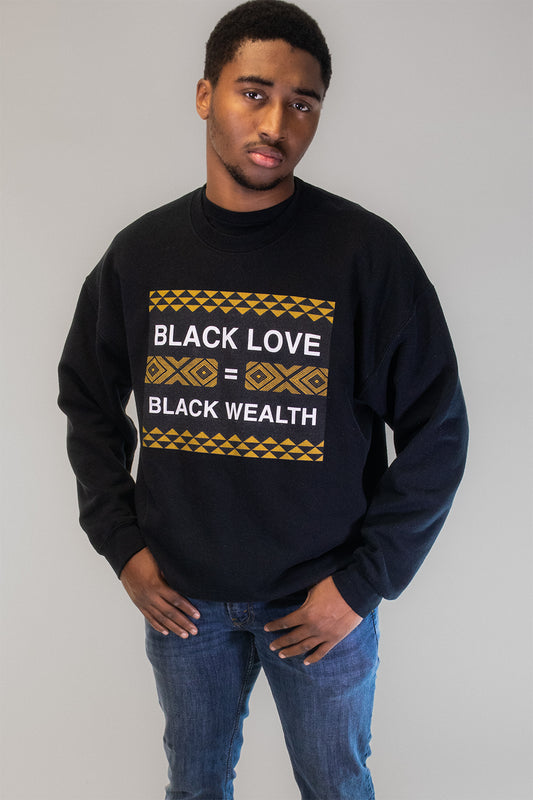
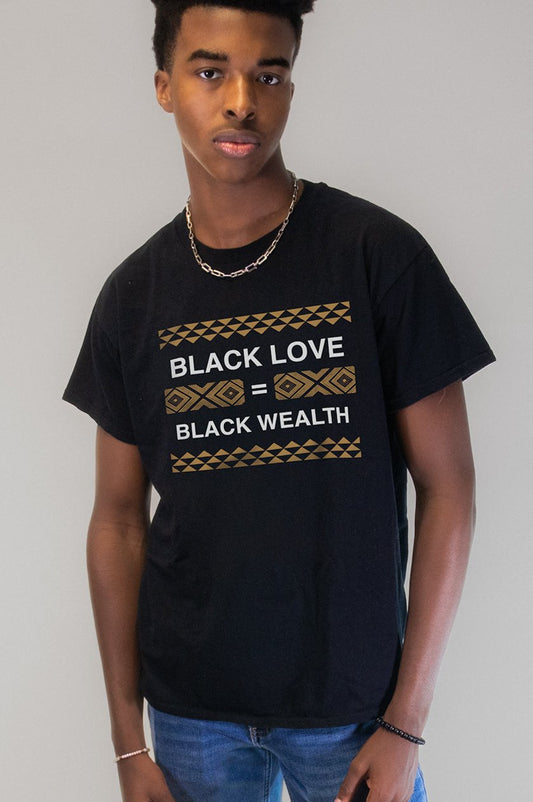
This is why I incorporate these patterns into my designs. It’s not about “fashion” in the fleeting sense; it’s about providing Everyday Armor for a generation learning to combat negative stereotypes and fight structural oppression.
We are the descendants of people who encoded their proverbs into the very earth they walked on. By choosing to read and repurpose these symbols, we honor that brilliance. We move from being consumers of an aesthetic to being keepers of a legacy.
The symbols have done their job — they survived. Now, it’s our turn to speak back.

This article is now available as a full lesson plan and student activity for Grades 4-6 for FREE! Click below to get it.
Free Mudcloth Lesson Plan for Grades 4-6

Sources:
AKROFI, Moses. DECODING THE SYMBOLISM OF BOGOLANFINI, KORHOGO AND FON FABRICS.
What is African Mudcloth? — Mae Woven
The Meaning of Mudcloth — Africa Imports
https://www.theethnichome.com/the-bogolan-mudcloth/